Start with the club he actually inherited
Forest’s board ratified Clough’s appointment on 6 January 1975. The club was in the Second Division, and his recent record included the unhappy spells at Brighton and Leeds. The BBC’s account of the appointment, published for its fiftieth anniversary, describes both the board’s apprehension and the transformation that followed. This was not an established champion hiring a manager to preserve its status. Forest gave Clough the opportunity to build again after a very public setback.
The core was not bought all at once
Martin O’Neill told the BBC that five players already at Forest when Clough arrived went on to share promotion, the English championship and the first European Cup. That is an important detail in a story often told through famous signings alone. Clough did not replace every inherited player with a ready-made champion. Part of the achievement was recognising that footballers in a Second Division squad could contribute at a much higher level when the team around them changed.
Peter Taylor’s return restored the partnership
Taylor joined Clough at Forest in 1976. Their previous work at Hartlepools and Derby had established the importance of the partnership: recruitment and judgement of players alongside leadership and organisation. Forest’s rise should not be described as the work of one man operating in isolation. Clough supplied the dominant public personality, but Taylor’s contribution belongs in any serious account of how the side was assembled. Promotion followed in the 1976–77 season.
Recruitment strengthened the spine
Peter Shilton arrived from Stoke and Kenny Burns from Birmingham in 1977. Shilton became the goalkeeper behind the league title and European victories; Burns, previously used as a forward, became a central defender in the champion side. These changes illustrate recruitment as more than collecting recognisable names. The relevant question was how a player would fit the team. Forest combined retained players with additions who strengthened positions essential to its defensive organisation and confidence.
Domestic success came before Munich
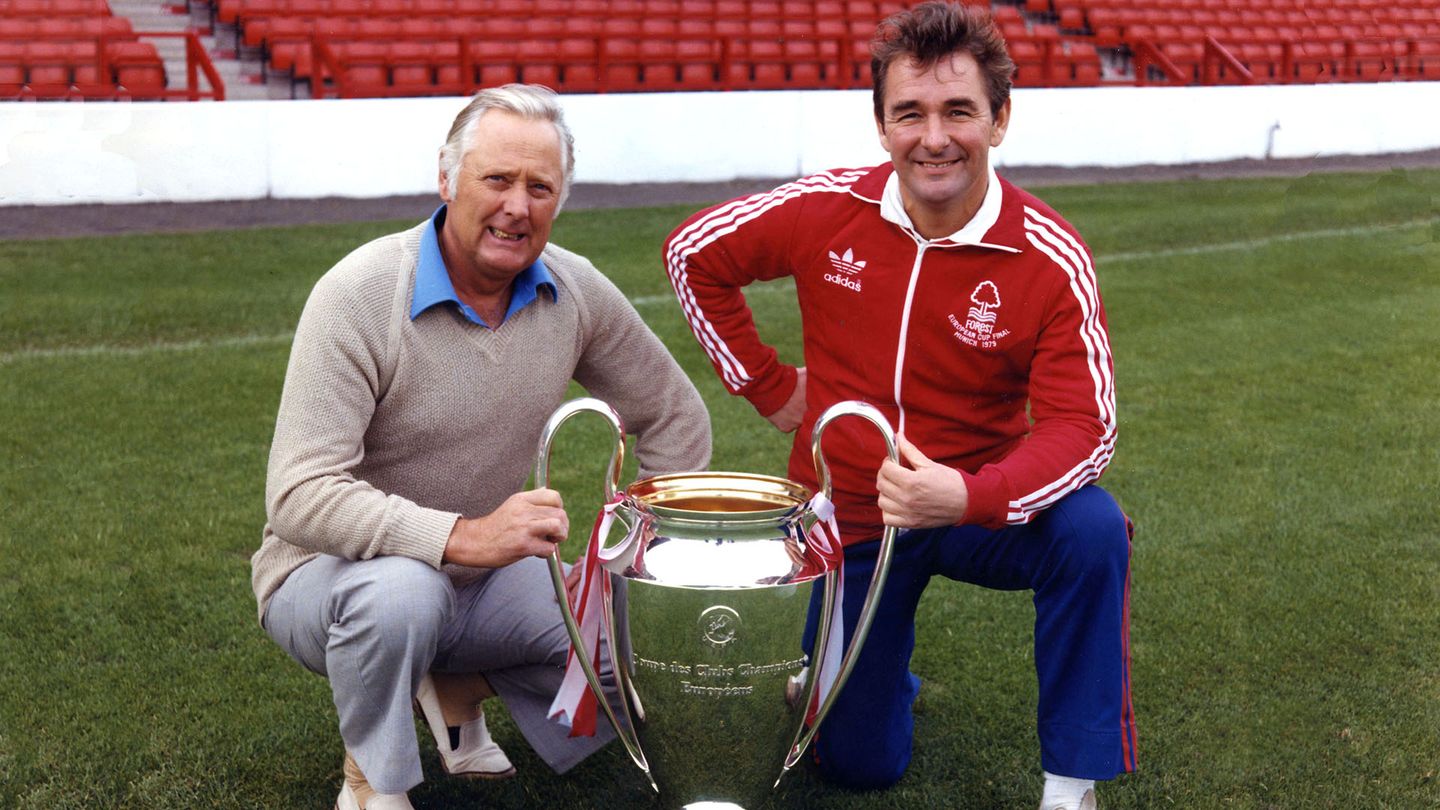
Forest won the English championship and the League Cup in 1978, immediately after promotion. The 42-match unbeaten league sequence demonstrated that the title was underpinned by consistency, not merely a brief run of favourable results. European competition then provided a new test. Trevor Francis, signed in 1979 as Britain’s first £1 million footballer, scored the winner against Malmö in the European Cup final. His goal was the conclusion of a team-building process already rewarded at home.
The second European Cup confirmed the achievement
John Robertson scored the only goal against Hamburg in Madrid in 1980 as Forest retained the European Cup. Two successive wins at that level made the transformation extraordinary even beyond the original league title. The chronology is worth keeping clear: Clough’s appointment in 1975, Taylor’s return in 1976, promotion in 1977, the English title in 1978, then European Cups in 1979 and 1980. The rise involved an inherited core, purposeful additions and a partnership whose contributions cannot be separated from the results.