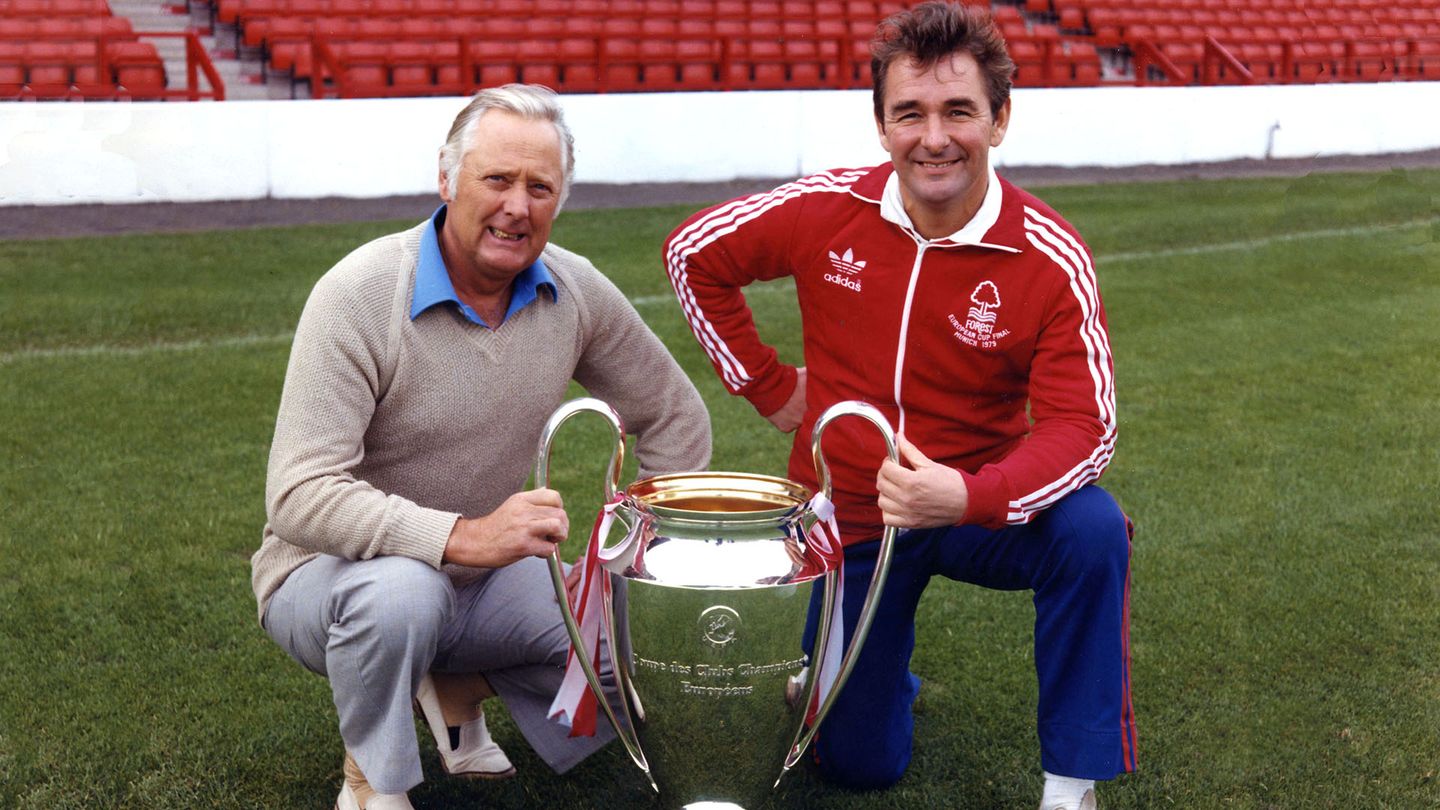
A record built across two seasons
Nottingham Forest’s 42-match unbeaten run was a First Division league record, not a claim that they never lost in any competition. It began with a 0–0 home draw against West Bromwich Albion on 26 November 1977 and ended with a 2–0 defeat at Liverpool on 9 December 1978. Between those dates, Brian Clough’s team completed the rest of one league season and carried their resistance deep into the next. The match-by-match records linked below establish the sequence.
The champions were newly promoted
Forest had returned to the First Division in 1977. Clough and Peter Taylor were not protecting the reputation of an established title-winning side: they were taking a newly promoted club into unfamiliar territory. The unbeaten sequence became part of the campaign that brought Forest the 1978 championship. It explains why that title was more than a brief burst of good form. Week after week, opponents failed to find a way to beat them.
Winning was only half the story
The run contained 21 wins and 21 draws. That balance matters. Forest did not sweep aside every opponent, and the record should not be retold as 42 victories. A draw preserved a point and kept a difficult afternoon from becoming a defeat. Their 4–0 win at Manchester United in December 1977 showed their attacking capacity; the goalless results elsewhere showed a different kind of resilience. Both belonged to the same achievement.
Where the record stopped
Liverpool finally ended the sequence at Anfield. Terry McDermott scored both goals in the 2–0 victory on 9 December 1978. By then the rivalry had already shaped several competitions: Forest had won the previous league title, beaten Liverpool in the League Cup final replay and eliminated them from the European Cup. Liverpool’s win was therefore more than the removal of an unbeaten record. It was a significant result against the team that had repeatedly obstructed them.
A league record, not an unbeaten calendar
It is important to keep the competition boundary clear. Forest could lose a cup tie without ending this league sequence. Likewise, winning a trophy did not add a match to the league total. The distinction makes the achievement easier to compare with later records and prevents a familiar statistic from becoming an exaggerated story. The 42 refers to consecutive top-flight league fixtures, spanning the 1977–78 and 1978–79 seasons.
Why it still belongs in Clough’s story
Arsenal eventually surpassed Forest’s mark in 2004 and extended their own league run to 49 matches. That did not erase what Clough’s side had achieved. Forest’s sequence connects promotion, the English championship and the beginning of their European adventure. The European Cups supply the most famous photographs, but this record captures the sustained domestic consistency that helped make those nights possible. Read the Forest career page for the wider story beyond the streak.